Heterologias
quinta-feira, novembro 27, 2008
My worthy Mr. Engineer! Do you really believe that all the bloggers of the whole world are actually such simpletons?

One of the richest and most eminent American merchants, a certain Edward Albert Filene, Vice-Chairman of the International Congress of Chambers of Commerce, is now touring Paris, Berlin and other big European centres to make personal contact with the most influential people of the commercial world.
At the banquets arranged, as is fitting, by the richest people of Europe in honour of one of the American rich, the latter is developing his “new” ideas on the world power of the merchant. Frankfurter = Zeitung,[1] the organ of German finance capital, reports in detail the ideas of this “advanced” American millionaire.
“We are experiencing a great historic movement,” he proclaims, “that will end in the transfer of all power over the modern world to representatives of commercial capital. We are the people who bear the greatest responsibility in the world and we should, therefore, be politically the most influential.
“Democracy is growing, the power of the masses is growing,” argued Mr. Filene (rather inclined, it seems, to regard those “masses” as simpletons). “The cost of living is rising. Parliamentarism and the newspapers, distributed in millions of copies a day, are providing the masses of the people with ever more detailed information.
“The masses are striving to ensure for themselves participation in political life, the extension of franchise, the introduction of an income-tax, etc. Power over the whole world must pass into the hands of the masses, that is, into the hands of our employees,” is the conclusion drawn by this worthy orator.
“The natural leaders of the masses should be the industrialists and merchants, who are learning more and more to understand the community of their interests and those of the masses.” (We note in parenthesis that the cunning Mr. Filene is the owner of a gigantic commercial house employing 2,500 people, and that he has “organised” his employees in a “democratic” organisation with profit-sharing, etc. Since he considers his employees hopeless simpletons, Mr. Filene is sure that they are completely satisfied and infinitely grateful to their “father-benefactor” ....)
“Wage increases, the improvement of labour conditions, that is what will bind our employees to us,” said Mr. Filene, “that is what will guarantee our power over the whole world. Everybody in the world who is at all talented will come to us to enter our service.
“We need organisation and still more organisation—strong, democratic organisation, both national and inter national,” the American exclaimed. He called upon the commercial world of Paris, Berlin, etc., to reorganise international chambers of commerce. They should unite the merchants and industrialists of all civilised countries in a single, mighty organisation. All important international problems should be discussed and settled by that organisation.
Such are the ideas of an “advanced” capitalist, Mr. Filene.
The reader will see that these ideas are a paltry, narrow, one-sided, selfishly barren approximation to the ideas of Marxism propounded over sixty years ago. “We” are great masters at upsetting and refuting Marx; “we”, the civilised merchants and professors of political economy, have refuted him completely!... And at the same time we steal little bits and pieces from him and boast to the whole world of our “progressiveness”....
My worthy Mr. Filene! Do you really believe that the workers of the whole world are actually such simpletons?
W. [V. I. Lenine], "The Ideas of an Advanced Capitalist", Rabochaya Pravda, No. 4, July 17, 1913. Tradução de George Hanna, Lenin Collected Works, Moscow, Progress Publishers, 1977, volume 19, pages 275-276.
Etiquetas: Bourgeoisie, capitalism, Colonialism, Communism, Democracy, Economics, Engenheiros, Filene, Gillette, Lang, Lenine, Marx, Mass Media, novos religiosos da utopia laica, Politics, Revolution

terça-feira, abril 08, 2008
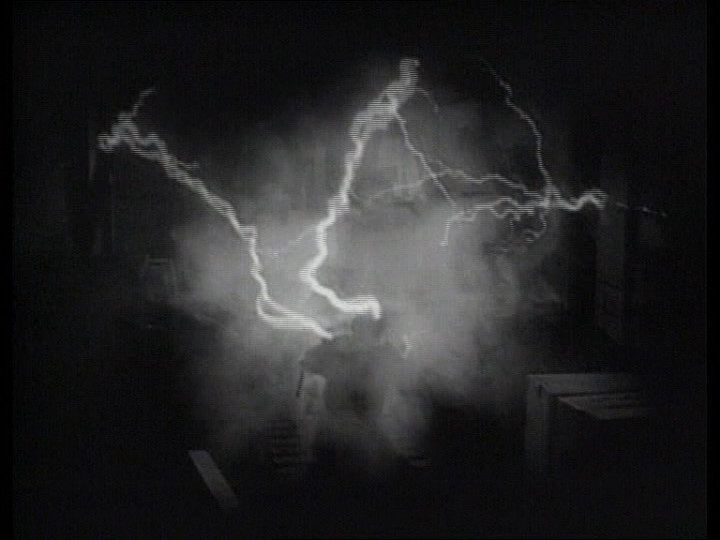
Quase, quase...
sábado, abril 05, 2008
...e vem para aqui...

sexta-feira, abril 04, 2008
Continua a avançar...

quarta-feira, abril 02, 2008
Ele está a chegar...


terça-feira, janeiro 15, 2008
Communism, Revolution and Democracy

In order to speak of the site that we are dealing with, I might venture the following thought: 'left' means, at the very least, that the political, as such, is receptive to what is at stake in community. (On the other hand, "right" means, at least, that the political is merely in charge of order and administration). In this sense, and provided we remain open to all the reelaborations and all the theoritical and pratical rethinking that might be necessary, the political is indissocialbe from something that the word "communism" has expressed all to poorly, even as it remains the word to point toward it, albeit very obscurely, even confusedly.
I make no claim to dissipate this obscurity entirely. But we should begin with this much: the political is the place where community as such is brought into play. It is not, in any case, just the locus of power relations, to the extent that these relations set and upset the necessarily unstable and taut equilibrium of collectivity. I do not wish to neglect the sphere of power relations: we never stop being caught up in it, being implicated in its demands. On the contrary, I seek only to insist on the importance and gravity of the relations of force and the class and/or party struggles of the world at a moment when a kind of broadly pervasive democratic consensus seems to make us forget that 'democracy', more and more frequently, serves only to assure a play of economic and technical forces that no politics today subjects to any end other that of its own expansion.
Jean-Luc Nancy, The Inoperative Community, Minneapolis, University of Minnesota Press, 1990, preface translated by Peter Connor, pp. xxxvi-xxxvii
* A imagem inicialmente "postada", mais graffitica, deixou de estar disponível.
Etiquetas: capitalism, Communism, Democracy, Politics, Revolution
segunda-feira, maio 14, 2007
D as in democracy

All voting is a sort of gaming, like checkers or backgammon, with a slight moral tinge to it, a playing with right and wrong, with moral questions; and betting naturally accompanies it. The character of the voters is not staked. I cast my vote, perchance, as I think right; but I am not vitally concerned that that right should prevail. I am willing to leave it to the majority. Its obligation, therefore, never exceeds that of expediency. Even voting for the right is doing nothing for it. It is only expressing to men feebly your desire that it should prevail. A wise man will not leave the right to the mercy of chance, nor wish it to prevail through the power of the majority. There is but little virtue in the action of masses of men. When the majority shall at length vote for the abolition of slavery, it will be because they are indifferent to slavery, or because there is but little slavery left to be abolished by their vote. They will then be the only slaves. Only his vote can hasten the abolition of slavery who asserts his own freedom by his vote.
Henry David Thoreau (1817-1862), Civil Disobedience, 1849
Etiquetas: Democracy, Disobedience, Holodkin, Politics, Revolution, Thoreau
sexta-feira, maio 04, 2007
R comme révolution
Ce qu'on a "découvert" récemment: les horreurs de Staline... Enfin! Tout le monde le sait depuis... - j'allais dire: tout le temps. Que les révolutions tournent mal ! (rires) Moi, ça me fait rire ! De qui on se moque ? Quand les nouveaux philosophes ont découvert que les révolutions ça tournait mal ... Faut vraiment être un peu débile !
(...) Toutes les révolutions foirent. Tout le monde le sait : on fait semblant de le redécouvrir, là. Faut être débile ! Alors, là-dessus, tout le monde s'engouffre. C'est le révisionnisme actuel. Il y a Furet qui découvre que la révolution française, c'était pas si bien que ça. Très bien, d'accord: elle a foiré aussi. Et tout le monde le sait ! La révolution française, elle a donné Napoléon. On fait des découvertes qui, au moins, ne sont pas très émouvantes par leur nouveauté. La révolution anglaise, elle a donné Cromwell... La révolution américaine, elle a donné... quoi ? Pire, non ? Elle a donné... je sais pas qui... elle a donné Reagan. Ca ne me parait pas tellement plus fameux. Alors, qu'est-ce que ça veut dire ? On est dans un tel état de confusion. Que les révolutions échouent, que les révolutions tournent mal, ça n'a jamais empêché les gens... ni fait que les gens ne deviennent pas révolutionnaires !
On mélange deux choses absolument différentes... - les situations dans lesquelles la seule issue pour l'homme c'est de devenir révolutionnaire. Là encore, on en parle depuis le début...
Finalement: c'est la confusion du Devenir et de l'Histoire. Si les gens deviennent révolutionnaires... Oui: c'est cette confusion des historiens... Les historiens, ils nous parlent de l'Avenir de la révolution, l'Avenir des révolutions... Mais c'est pas du tout la question ! Alors, ils peuvent toujours remonter aussi haut pour montrer que si l'Avenir a été mauvais, c'est que le mauvais était déjà là depuis le début, mais le problème concret, c'est: comment et pourquoi les gens Deviennent-ils révolutionnaires. Mais ça, heureusement, les historiens ne l'empêcheront pas.
C'est évident que les Africains du Sud, ils sont pris dans un Devenir révolutionnaire. Les Palestiniens, ils sont pris dans un Devenir révolutionnaire. Si on me dit après: "Vous verrez, quand ils auront triomphé... Si leur révolution réussit, ça va mal tourner !"... D'abord, ce serait pas les mêmes. Ce ne seront pas du tout les mêmes genres de problèmes. Et puis, bon : ça créera une nouvelle situation, à nouveau il y aura des devenirs révolutionnaires qui se déclencheront... L'affaire des hommes, dans les situations de tyrannie, d'oppression, c'est effectivement le Devenir révolutionnaire, parce qu'il n'y a pas d'autre chose à faire. Quand on nous dit après "Ah, ça tourne mal", tout ça.. : on ne parle pas de la même chose. C'est comme si on parlait deux langues tout à fait différentes : l'Avenir de l'histoire et le Devenir actuel des gens, c'est pas la même chose.
Gilles Deleuze (1925-1995) entrevistado por Claire Parnet (1988-89)
Etiquetas: Deleuze, Interview, Mass Media, May 68, Revolution
Archives
03/07 04/07 05/07 07/07 09/07 10/07 12/07 01/08 02/08 03/08 04/08 10/08 11/08 12/08 01/09 02/09 03/09 05/09 07/09 10/09 02/10 04/10 05/10 06/10 02/11 04/11 05/11 06/11 11/11 02/12 09/12 03/13 04/13 03/14

